

Achieving that crisp, luminous salon blonde or clean, shimmering silver grey is an art form. However, anyone who has ever lightened their hair—or embraced their natural grey locks—knows the inevitable battle against unwanted warmth. Within weeks, pristine platinum can morph into an unflattering brassy yellow.
This is where professional anti yellow shampoo becomes an indispensable staple. Whether you are a salon professional seeking top-tier backwash solutions or a client maintaining your colour investment at home, understanding how these specialised formulas work is essential for long-lasting, radiant results.
In this guide, we break down the colour theory, science, application techniques, and premium Italian formulations that keep light hair immaculate.
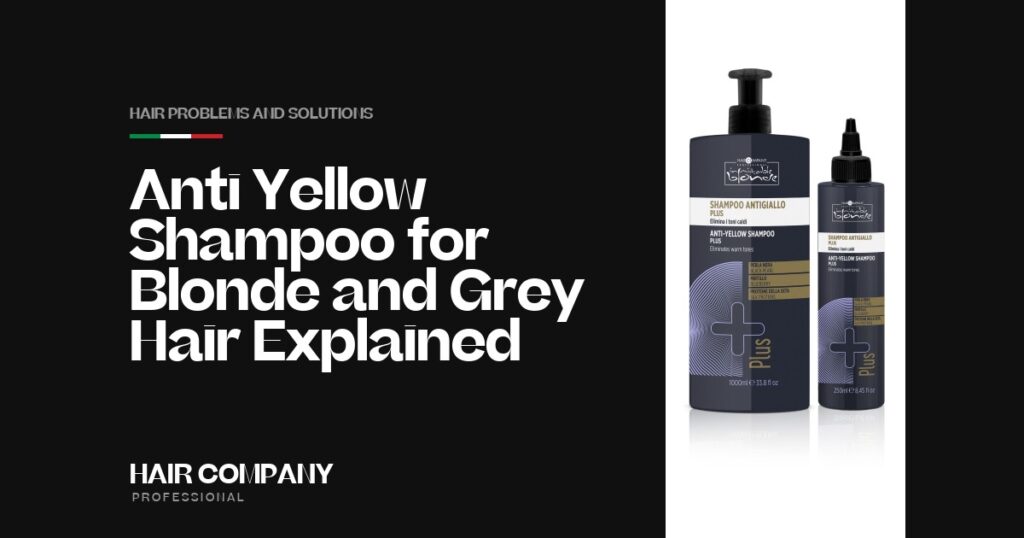
Short answer: An anti-yellow shampoo is a conditioning shampoo carrying violet and blue pigment that deposits on the hair surface to cancel warm tones. Anti-Yellow Shampoo Plus uses black pearl and blueberry for the pigment and silk protein for conditioning, and it is SLES-free and paraben-free. It is used once or twice a week, gently cleansing and left on for a few minutes, not daily: over-use builds up and can leave a dull grey cast on very porous hair. The instruction most people miss is the pairing. The manufacturer says directly that to amplify the effect and soften the hair, you use it alongside the Color Drops mask in the No Yellow pigment. It comes in 250 ml for retail and 1000 ml for the backwash. On grey hair it does the same job, cancelling the yellowing that comes with age and product build-up.
The full anti-yellow routine as the manufacturer sets it out:
| Product | How often | Leave on | Note |
|---|---|---|---|
| Anti-Yellow Shampoo Plus | 1 to 2 times a week | A few minutes | Black pearl and blueberry pigments |
| Color Drops Mask, No Yellow | As needed | 20 min salon, 10 min at home | Manufacturer pairs it with the shampoo |
| Biphasic Anti-Yellow Spray | After any lightening | Leave in | Final step, do not rinse |
What Is Anti-Yellow Shampoo?
An anti yellow shampoo (frequently referred to as purple or silver shampoo) is a specialised corrective cleanser formulated with deep violet pigments. Designed specifically for lightened, bleached, highlighted, natural blonde, and grey hair, its primary function is to neutralise stubborn brassy and golden tones, restoring a clean, cool, and balanced hue.
Unlike standard clarifying or colour-safe shampoos, an anti-yellow formulation deposits micro-pigments onto the hair shaft during the washing process, acting as a quick toner that refreshes hair between salon visits.
The Science of Colour Theory: How It Works
To understand why violet shampoo works, one must look at basic colour wheel theory.
In colourimetry, colours directly opposite each other on the colour wheel cancel each other out:
* Violet sits directly opposite Yellow.
* Blue sits directly opposite Orange.
* Green sits directly opposite Red.
When hair is bleached or naturally loses pigment (as with grey hair), underlying warm tones become exposed. By applying a product rich in violet or cool neutralising pigments, the yellow tones are visually cancelled out. The result is a neutral, cooler, or ash-toned reflection that looks fresh and bright rather than dull or warm.
Why Does Blonde, Bleached, and Grey Hair Turn Yellow?
Understanding the root causes of brassiness helps hairdressers and clients prevent it more effectively:
1. Underlying Pigment Exposure
During the bleaching process, the natural melanin in the hair is lightened. Hair lifts through stages: red, red-orange, orange, yellow-orange, and finally pale yellow. Unless hair is lifted to pure white, natural warm undertones remain beneath your toner. As toners fade, that underlying pale yellow emerges.
2. Environmental Oxidation and UV Rays
Sunlight and environmental pollutants cause oxidation, breaking down the chemical bonds of your toner and accelerating the return of warmth.
3. Hard Water and Mineral Build-Up
Washing hair in hard water deposits minerals such as iron, copper, and calcium into the hair cuticle. Over time, these mineral deposits react and cast a yellow or dingy brassy film over light hair.
4. Thermal Styling Damage
Excessive heat from hair dryers, straighteners, and curling wands can scorch the hair cuticle and degrade colour pigments, turning cool blonde yellow almost instantly.
5. Natural Grey Discolouration
Natural grey and white hair lacks melanin, making it exceptionally porous and vulnerable to external discolouration from pollution, cigarette smoke, styling product residue, and chlorinated water.
What to Look For in a Professional Anti-Yellow Formulation
Not all purple shampoos are created equal. High-street options often contain harsh sulphates and low-grade direct dyes that dry out compromised strands, leaving hair feeling brittle with patchy violet staining.
A high-performance professional formula should balance intense pigment deposit with restorative hair care:
* High-grade pigments: To evenly neutralise warmth without over-depositing or turning the hair muddy.
* Hydrolysed proteins: Such as silk or pea protein, to rebuild tensile strength and repair the porous structure of bleached hair.
* Antioxidant fruit extracts: To protect against free radical damage and stop oxidation.
* Purifying agents: Ingredients like charcoal that detoxify impurities and mineral residue.
The Best Professional Anti-Yellow Shampoos
At Hair Company UK, we curate exceptional Italian hair care designed for demanding salon environments and discerning clients. Here are our top recommendations for neutralising yellow tones while conditioning fragile hair.
Inimitable Blonde Anti-Yellow Shampoo Plus
For those dealing with stubborn golden tones who also need rich nourishment, the Inimitable Blonde range delivers targeted corrective action backed by luxury botanical extracts.
- For Home Care: ANTI-YELLOW SHAMPOO PLUS 250ML (£14.45)
- For Professional Backwash: ANTI-YELLOW SHAMPOO PLUS 1000ML (£28.49)
Why It Works:
* Neutralises Warmth: Instantly eliminates yellow tones from blonde and highlighted hair.
* Nourishes & Strengthens: Infused with Hydrolysed Silk and Black Pearl extracts to restore moisture, elasticity, and softness to bleached fibres.
* Antioxidant Defence: Contains Vaccinium Myrtillus (Blueberry) Fruit Extract, which shields delicate lightened hair from oxidative stress and environmental ageing.
* Prevents Future Discolouration: Coats the hair shaft to prevent rapid re-yellowing.
Ice Blonde Treatment Shampoo
If you are maintaining an ultra-cool platinum, icy blonde, or clear silver-grey shade, the Ice Blonde range offers intensive toning and detoxifying power.
- For Home Care: ICE BLONDE TREATMENT SHAMPOO 250ML (£14.49)
- For Professional Backwash: ICE BLONDE TREATMENT SHAMPOO 1000ML (£28.49)
Why It Works:
* Ice-Cool Tone Retention: Specifically engineered to retain icy, Scandinavian blonde and silver-grey tones.
* Charcoal Detoxification: Formulated with Charcoal powder to draw out impurities, pollutants, and mineral build-up that cause yellowing.
* Extends Colour Longevity: Prolongs the life of professional salon toners, spacing out required chemical services.
* Restores Shine: Leaves compromised, high-lift hair silky, manageable, and reflective.
Step-by-Step: How to Use Anti-Yellow Shampoo Correctly
To get the most out of your toning routine without over-toning or drying your hair, follow this step-by-step method:
Step 1: Pre-Wash (If Necessary)
If your hair has heavy product build-up or excess oils, perform a quick first cleanse with a gentle hydrating shampoo. This allows the violet pigments of your treatment shampoo to deposit evenly.
Step 2: Thoroughly Saturate Hair
Wet hair completely with lukewarm water. Warm water helps open the cuticle slightly, allowing the toning pigments to adhere where they are needed most.
Step 3: Apply Evenly
Lather a generous amount of ANTI-YELLOW SHAMPOO PLUS 250ML or ICE BLONDE TREATMENT SHAMPOO 250ML in your palms. Distribute evenly from roots to mid-lengths, working through to the porous ends last.
Step 4: Time Your Application
Development time depends on hair porosity and the level of warmth:
* Subtle Brightening / Natural Grey: 1 to 2 minutes.
* Standard Blonde Maintenance: 2 to 3 minutes.
* Intense Neutralisation / Platinum Blonde: 3 to 5 minutes.
Pro Tip for Salons: When using ANTI-YELLOW SHAMPOO PLUS 1000ML or ICE BLONDE TREATMENT SHAMPOO 1000ML at the backwash, monitor the toning progress visually at the bowl.
Step 5: Rinse Thoroughly
Rinse completely with cool to lukewarm water until the water runs clear. Cool water seals the cuticle, locking in the pigments and boosting shine.
Step 6: Condition and Hydrate
Always follow with a nourishing conditioner or an intensive hair mask to restore moisture and maintain elasticity.
Common Mistakes to Avoid
Even with the best formulas, improper technique can lead to subpar results. Avoid these common errors:
1. Using It for Every Single Wash: Anti-yellow shampoo is a colour-corrective treatment, not a daily cleanser. Using it daily can lead to over-pigmentation, giving hair a dull, dark lilac hue. Use it once or twice weekly, alternating with a moisture-rich shampoo.
2. Leaving It on Too Long on Over-Processed Ends: Highly porous, bleached ends soak up pigment much faster than roots. Emulsify through the ends only in the final minute of washing.
3. Applying to Dry Hair Without Professional Oversight: While applying to dry hair is a technique sometimes used in salons for intense toning, it can lead to patchy results at home. Stick to damp, evenly saturated hair.
4. Neglecting Moisture: Lightened hair is inherently more delicate. Always pair your toning shampoo with protein and moisture-rich conditioners.
The Verdict
A salon-worthy blonde or sophisticated grey requires deliberate care. Incorporating a premium, Italian-formulated anti yellow shampoo into your regimen neutralises yellow undertones, restores reflective shine, and protects hair integrity.
Explore the professional collection at Hair Company UK to keep your blonde luminous, clear, and perfectly toned every single day.
Frequently Asked Questions
Quick Navigation:
- How often should I use anti-yellow shampoo?
- Will anti-yellow shampoo lighten dark blonde or brunette hair?
- How does anti-yellow shampoo benefit natural grey and silver hair?
- What should I do if my hair turns slightly purple or blue after washing?
- Can I use anti-yellow shampoo immediately after bleaching or colouring?
- What is the difference between regular purple shampoo and charcoal-based ice blonde shampoo?