

Achieving breathtaking volume, glass-like shine, and long-lasting hold is the hallmark of any exceptional salon service. However, behind every intricate updo, bouncy blowout, or sleek finish lies an ongoing professional challenge: product build-up. Over time, the continuous layering of styling polymers, heavy silicones, waxes, and heat protectants can leave hair feeling heavy, dull, and unresponsive.
For salon professionals, understanding how to reduce product build up in salon styling is essential for maintaining hair integrity, guaranteeing vibrant colour results, and delivering weightless styles. For clients, knowing how to manage build-up at home ensures salon-fresh results between appointments.
In this comprehensive guide, we explore the science behind styling residue, practical techniques to prevent overload at the styling station, and restorative cleansing routines that reset the hair canvas.
What Causes Product Build-Up in Salon Styling?
Product build-up occurs when cosmetic ingredients adhere to the hair shaft and scalp faster than they are washed away. In a professional salon setting, this accumulation typically stems from several distinct sources:
- Non-Soluble Silicones: Used extensively to deliver immediate slip and artificial shine, certain silicones coat the hair cuticle in a water-resistant film that standard mild shampoos struggle to dissolve.
- Fixative Polymers and Resins: High-hold styling products, such as traditional lacquers and gels, use plasticising polymers to freeze hair into position. When used repeatedly without proper removal, these resins create a crunchy, flaky barrier.
- Waxes, Butters, and Heavy Oils: Often found in rich edge-control pastes, pomades, and dense conditioning masks, heavy lipids can overwhelm fine-to-medium hair fibres.
- Environmental and Chemical Impurities: Styling products act like magnets for dust, pollutants, chlorine, and hard water minerals (calcium and magnesium), forming a complex layer of residue over the hair cuticles.
When hair becomes coated in these substances, moisture cannot penetrate the cortex, treatments fail to work effectively, and heat styling tools end up baking the residue directly into the cuticle scales.
The Hidden Costs of Product Accumulation
Allowing residue to accumulate impacts both the client experience and the stylist’s creative freedom. Recognising the telltale symptoms is the first step toward remedying the issue:
1. Inconsistent Colour and Chemical Results
When applying permanent colour, bleach, or perming solutions over product build-up, the chemical agents cannot penetrate the hair cortex evenly. This frequently leads to patchy lightening, banded colour lift, and prematurely faded toners.
2. Lack of Movement and Volume
Hair burdened with layered styling products loses its natural elasticity and bounce. Instead of holding an airy blowout, the hair feels limp, waxy at the roots, and stiff through the mid-lengths and ends.
3. Dullness and Flaking
As layers of styling polymers dry out and fracture, they create a matte, lacklustre appearance that mimics dry scalp or dandruff. Hair loses its ability to reflect light, regardless of how much finishing serum is applied.
4. Breakage from Heat Crystallisation
When hot tools like straightening irons or curling wands meet heavy product residue, the extreme temperatures can caramelise and crystallise the styling agents on the cuticle surface. This weakens the structural integrity of the hair fibre, causing friction, snagging, and eventual breakage.
5 Practical Steps to Prevent Build-Up at the Styling Station
Stylists can take proactive steps to minimise product congestion without compromising on hold, texture, or finish.
1. Master the “Cocktailing” and Layering Technique
Instead of loading multiple heavy products simultaneously, apply multi-benefit formulas in light, deliberate layers. Begin with the lightest water-based products (such as detangling sprays and leave-in tonics) on damp hair, followed by heat protectants, and finish with oils or creams sparingly applied to dry ends.
2. Switch to Residue-Free, Brushable Formulations
The mark of modern, premium styling is flexibility. Choosing finishing sprays formulated with conditioning agents like panthenol ensures that hair maintains its structure without leaving a chalky residue.
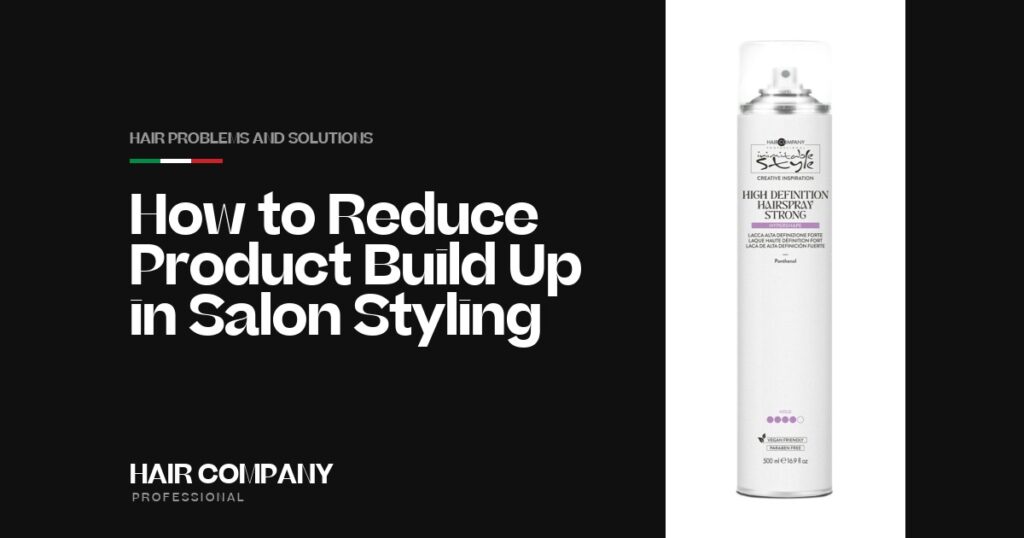
For high-fashion work and structured styling, using HIGH DEFINITION HAIRSPRAY STRONG 500ML (£27.62) provides extra-strong, long-lasting hold while drying clean and residue-free. Because it brushes out effortlessly without flaking, stylists can reposition hair throughout a session without needing to rewash the client, effectively preventing cumulative build-up.
3. Protect the Client and Maintain Clean Workspace Habits
Hygiene and precision go hand in hand. When performing intense clarifying treatments, colour corrections, or layered styling services, always shield your client’s clothing with high-grade Disposable Capes (£). These single-use, hygienic capes provide reliable protection during chemical and deep cleansing stages, ensuring an elevated salon experience while preventing accidental residue transfer.
4. Customise Product Application by Zone
Avoid applying styling products uniformly from root to tip. Volumising mousses and root-lifters belong strictly at the base, while rich styling creams, balms, and split-end sealers should be concentrated from the mid-lengths downward.
5. Educate Clients on Emulsification
Many clients inadvertently cause their own build-up by dispensing products directly onto the hair. Teach them to vigorously emulsify creams, pastes, and serums between their palms before application. This friction breaks down the formula, warming the ingredients for an even, micro-fine distribution.
Resetting the Canvas: Salon Clarifying and Detox Protocols
Even with disciplined styling habits, regular cleansing resets are vital to keep the hair responsive and healthy.
“
+-------------------------------------------------------------------+

|               THE PROFESSIONAL RESET PROTOCOL                     |

|                                                                   |

|   1. DIAGNOSE        Assess texture, porosity, and residue level  |

|   2. PURIFY          Target mineral, chlorine, and product layers |

|   3. REBALANCE       Restore moisture and seal the cuticle        |

|   4. PROTECT         Apply lightweight, non-residue stylers       |

+-------------------------------------------------------------------+
The Detox Cleansing Step
When dealing with clients who frequently swim, use hard water, or layer heavy styling aids, a multi-action detox cleanser is required. The SEA BREEZE HYDRATING SHOWER GEL AND SHAMPOO 250ML (£13.6) offers a dual-action formula that gently yet thoroughly eliminates stubborn chlorine, sea salt, and product deposits.
Enriched with Beta Carotene for antioxidant defence, Polynesian Beauty Oil for lightweight nourishment, and soothing Jasmine Extract, this versatile wash polishes the hair cuticle clean without stripping essential lipid moisture, leaving the scalp refreshed and the hair fibre purified.
Establishing a Complete Restorative Routine
Clarifying the hair is only half the battle; the hair fibre must immediately be replenished with balanced hydration and structural proteins to prevent compensatory oil production.
To achieve this equilibrium, recommend the Hair Care Professional Routine (£129.99). This comprehensive care system provides professional-grade cleansing, conditioning, and treatment phases specifically formulated to maintain the hair’s natural vitality, ensuring hair remains receptive to daily salon styling without becoming overburdened.
Client Consultation: Helping Clients Manage Build-Up at Home
A successful salon visit extends to the client’s home routine. Stylists should guide their clients through tailored home maintenance advice to prevent severe build-up between appointments:
- Establish a Washing Schedule: Clients with fine hair or those who exercise daily may benefit from washing every 2 to 3 days, whereas coarse or curly hair types can stretch washes by using lightweight, water-soluble products.
- Debunk Dry Shampoo Overuse: Dry shampoos are designed to absorb sebum in emergencies, not replace wet cleansing. Explain that overusing aerosol starches causes scalp congestion and hair follicle asphyxiation.
- The Double-Cleanse Rule: Encourage clients to adopt a double-cleansing approach on wash days: the first shampoo breaks down surface oils and styling polymers, while the second shampoo purifies the scalp and deposits active conditioning ingredients.
- Rinse Thoroughly with Tepid Water: Insufficient rinsing is a primary cause of at-home build-up. Clients should spend at least two full minutes rinsing shampoo and conditioner from their hair with lukewarm water.
Conclusion: Balancing Performance and Purity
Reducing product build-up in salon styling does not mean sacrificing creative flair or long-lasting structural hold. By switching to advanced, brushable styling tools like HIGH DEFINITION HAIRSPRAY STRONG 500ML (£27.62), integrating detoxifying cleansers such as SEA BREEZE HYDRATING SHOWER GEL AND SHAMPOO 250ML (£13.6), and implementing complete regimes like the Hair Care Professional Routine (£129.99), hair professionals can achieve impeccable styling results while keeping the hair cuticle pure, vibrant, and resilient.
Frequently Asked Questions
Quick Navigation:
- How often should professional clients use a clarifying shampoo to remove build-up?
- Can styling product build-up cause hair thinning or hair loss?
- Why does hair feel dry and waxy at the same time when product build-up is present?
- Will product build-up affect hair colour processing in the salon?
- How can stylists differentiate between dandruff and styling product build-up?
- Why are single-use disposable capes recommended during salon clarifying services?