

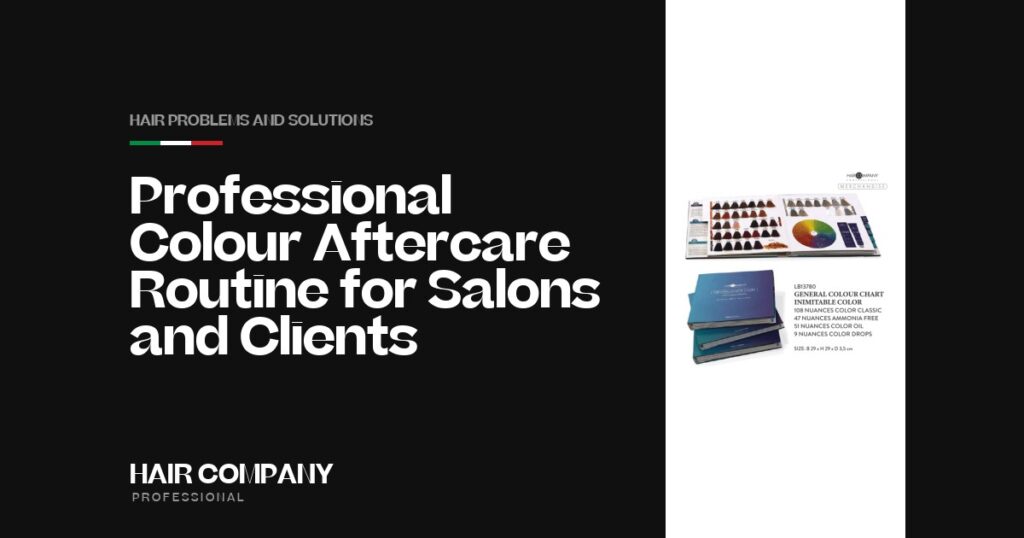
Achieving the perfect shade in the salon is an art form, but maintaining its vibrancy, tone, and structural integrity requires a disciplined science. Whether you are an accomplished salon stylist looking to refine your service protocol or a client eager to protect your salon investment, establishing a dedicated professional colour aftercare routine is the difference between dull, fading tresses and long-lasting, luminous colour.
Hair colour services chemically alter the hair fibre by lifting the cuticle and modifying natural melanin pigments. Without the correct post-colour protocol, oxidative stress, environmental aggressors, and frequent washing can quickly cause premature fading and moisture depletion.
This comprehensive guide explores the essential steps of professional colour aftercare, bridging the transition from the salon backwash to daily home maintenance.
Short answer: A colour aftercare routine splits into what happens at the backwash and what the client does at home, and the salon half is the part that decides whether the colour holds. The manufacturer specifies four steps in a fixed order: rinse, Post Treatment Shampoo at pH 4.5 for three to five minutes, Rebalancer Gel at pH 3 for five minutes, then Post Treatment Mask at pH 3.5. The descending pH closes the cuticle in stages instead of shocking it. At home the same logic continues with the 250 ml versions of the shampoo and mask, and Bran Treatment as a leave-in for porous ends. For coloured hair that is also lifted, add an anti-yellow shampoo once or twice a week. Sending a client home without the retail half of this routine is where most colour fade complaints actually begin.
The salon sequence, then what keeps it going between visits:
| Step | Product | Leave on | Why this order |
|---|---|---|---|
| 1 | Rinse out colour or bleach | Stops the reaction | |
| 2 | Post Treatment Shampoo (pH 4.5) | 3 to 5 min | Closes the cuticle, locks tone |
| 3 | Post Treatment Rebalancer Gel (pH 3) | 5 min | Brings pH down after alkaline service |
| 4 | Post Treatment Mask (pH 3.5) | 3 to 5 min | Rebuilds and seals |
| Product | How often | Leave on | Note |
|---|---|---|---|
| Anti-Yellow Shampoo Plus | 1 to 2 times a week | A few minutes | Black pearl and blueberry pigments |
| Color Drops Mask, No Yellow | As needed | 20 min salon, 10 min at home | Manufacturer pairs it with the shampoo |
| Biphasic Anti-Yellow Spray | After any lightening | Leave in | Final step, do not rinse |
The Science of Hair Colour: Why Aftercare Is Essential
To understand why colour aftercare is indispensable, one must examine the biological structure of the hair strand. Hair colour formulation opens the outer cuticle scales, allowing oxidative pigments to penetrate deeply into the cortex.
Once the service is complete, three primary risks threaten colour longevity:
- Cuticle Porosity: When the cuticle remains partially raised, colour molecules easily leach out during washing.
- Oxidative Stress and Free Radicals: UV exposure and minerals in domestic tap water oxidise colour pigments, causing brassiness or premature dullness.
- Lipid and Moisture Depletion: Chemical processing strips natural fatty acids from the hair fibre, leading to dryness, breakage, and a loss of reflective shine.
A structured professional colour aftercare routine works to realign the hair’s natural pH level, seal the cuticle layer, replenish lost lipids, and lock pigments inside the cortex for weeks of mirror-like radiance.
Step 1: The In-Salon Foundation (Starting with Superior Colour)
Flawless colour aftercare begins before the client ever leaves the styling chair. The quality of the colour formulation and the precision of shade selection dictate how well the hair will retain pigment over time.
Professional colourists rely on precision diagnostic tools to ensure accurate shade mapping and predictable results. Using a dedicated swatch system such as the GENERAL COLOUR CHART INIMITABLE COLOR (£30) allows stylists to analyse baseline undertones and select the exact tonal balance required for their client. Similarly, for tailored male grooming and discrete grey blending services, utilising the COLOUR CHART MADE FOR MEN (£) ensures bespoke formulation and seamless coverage.
For salons looking to establish an uncompromising standard of service, starting with a comprehensive system like the Colouring Starter Kit – Professional Colour System (£129.99) guarantees access to high-performance Italian formulations that respect the hair structure from root to tip. These professional systems are enriched with protective agents that minimise chemical stress during the colouring process itself, paving the way for superior colour retention.
Step 2: The In-Salon Backwash Protocol
The minutes immediately following colour processing are critical for long-term vibrancy. Salons must adhere to a strict post-colour sequence:
1. Thorough Emulsification: Before rinsing thoroughly, emulsify the colour with a small amount of warm water. This loosens residual dye from the scalp and enhances shade uniformity.
2. Acidifying Cleansing: Use a professional, low-pH shampoo specifically formulated to close the cuticle and neutralise alkaline residues left behind by developers.
3. Cuticle Sealing Treatment: Apply a rich, acidifying post-colour mask to restore the hair’s natural pH (4.5 to 5.5) and lock in micro-pigments.
Step 3: The 72-Hour Rule for Clients
One of the most vital recommendations stylists must give their clients is the 72-hour washing rule.
Following a chemical colour service, the hair cuticle requires up to three full days to close completely and allow the artificial pigments to settle fully within the cortex. Washing the hair within the first 48 to 72 hours opens the cuticle prematurely, resulting in immediate colour washout and noticeable tonal fading.
What Clients Should Do During the First 72 Hours:
- Keep hair completely dry in the shower using a protective shower cap.
- Avoid vigorous workouts that generate heavy scalp perspiration.
- Refrain from using tight hair elastics that can create mechanical stress on softened hair fibres.
Step 4: The At-Home Professional Maintenance Routine
Once the initial 72-hour window has passed, the client must transition to a dedicated home-care regimen. Supermarket shampoos and generic conditioners frequently contain harsh sulphates, high salt contents, and high alkalinity that strip colour molecules in just a few washes.
Investing in a complete regimen like the Hair Care Professional Routine (£129.99) equips clients with the salon-grade formulations necessary to nourish, fortify, and protect colour-treated hair at home.
1. Sulphate-Free, Colour-Safe Cleansing
Colour-treated strands require ultra-gentle surfactants. Sulphate-free formulas cleanse the scalp effectively without lifting the cuticle or stripping away protective lipid layers. Clients should wash their hair no more than two to three times per week to preserve pigment saturation.
2. Acidic Conditioning and Lipid Replenishment
Every wash must be followed by a conditioning treatment designed to restore moisture and smooth the cuticle surface. Conditioners formulated with botanical oils, amino acids, and acidic pH balancers ensure that light reflects evenly off the hair shaft, producing intense multi-dimensional shine.
3. Weekly Deep Restorative Treatments
Colour services inherently reduce the hair’s tensile strength. Integrating a weekly deep-conditioning mask repairs internal keratin bonds, restores elasticity, and prevents the porous split ends that accelerate colour fade.
Step 5: Environmental and Thermal Defence
Even the highest quality colour can deteriorate quickly if exposed to heat and environmental stressors without protection. Stylists and clients must address three key external factors:
Thermal Styling Protection
Curling wands, straighteners, and high-heat blow-dryers break down colour pigments and evaporate essential moisture. Always apply a professional heat protectant barrier prior to any thermal styling. Keep styling tools below 185°C to avoid scorching delicate colour molecules.
Water Temperature Control
Washing hair with piping hot water expands the cuticle layer, allowing pigments to escape down the drain. Always advise clients to wash with lukewarm water and finish with a cool rinse to lock the cuticle tightly against the hair shaft.
UV and Chlorine Protection
Sunlight acts as a natural bleaching agent, degrading chemical dyes and shifting cool blondes into brassy tones. Recommend UV-blocking leave-in sprays during summer months, and instruct swimming clients to wet their hair with fresh water and apply a protective leave-in barrier before entering chlorinated pools.
The Stylist’s Retail Strategy: Empowering Client Aftercare
Salons should view aftercare recommendations not merely as a retail opportunity, but as an essential continuation of their professional service. A client’s hair is a walking billboard for the colourist’s expertise; ensuring the colour looks as vibrant at week six as it did on day one protects the salon’s reputation.
How Stylists Can Improve Client Compliance:
- Explain the ‘Why’: Walk clients through what happens during the colour process and why standard retail products will compromise their investment.
- Customise the Prescription: Tailor product recommendations precisely to the client’s hair texture, porosity, and lifestyle.
- Demonstrate Correct Usage: Show clients how much product to use and explain proper application techniques at the styling station.
By combining the structural integrity provided by professional salon tools with disciplined home aftercare routines, both hairdressers and clients can enjoy luminous, long-lasting colour results between salon appointments.
Frequently Asked Questions
Quick Navigation:
- How long should you wait to wash your hair after professional colouring?
- Why does professional hair colour fade quickly at home?
- What type of shampoo is best for colour-treated hair?
- Can swimming ruin fresh hair colour?
- How often should I use a hair mask on colour-treated hair?
- Does heat styling cause coloured hair to turn brassy?