

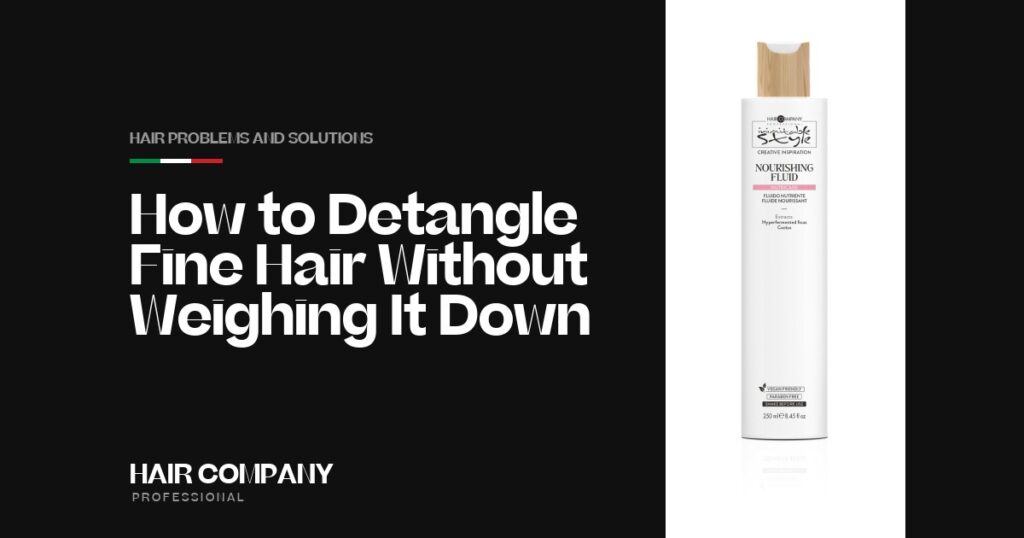
Fine hair is notoriously temperamental. Because each individual strand has a smaller diameter than medium or coarse hair, it lacks structural density and easily succumbs to friction, static, and tangling. For salon clients and haircare enthusiasts alike, the daily struggle is palpable: detangling fine hair often leads to severe mechanical breakage, while standard detangling treatments and heavy conditioners leave the hair limp, greasy, and devoid of natural movement.
Learning how to detangle fine hair without weighing it down requires a delicate balance of mechanical precision, botanical chemistry, and lightweight formulation. By shifting from heavy, silicone-dense butter creams to bio-fermented, weightless hydrators, you can achieve knot-free lengths with exceptional root lift and body.
Why Fine Hair Tangles So Easily: The Science of the Strand
To resolve the knotting dilemma, we must understand why fine strands are inherently prone to tangling.
1. Smaller Cross-Sectional Area: Fine hair has a narrower cortex and often a thinner cuticle layer. Because the strands are light, they drift and intertwine effortlessly with friction from collars, scarves, pillowcases, and wind.
2. Static Attraction: Lacking the natural weight of coarser textures, fine hair carries a higher surface charge. When dry or stripped of moisture, strands repel each other unevenly, creating static cling that quickly morphs into stubborn matting.
3. Elevated Cuticle Scales: When hair is chemically treated, colour-processed, or exposed to heat, the microscopic cuticle scales lift. Lifted cuticles act like microscopic hooks, catching adjacent strands and locking them together into knots.
4. The Wet Fragility Dilemma: When wet, hair stretches by up to 30% before breaking; however, fine hair has a much lower tensile threshold. Aggressive brushing at the backwash or post-shower snaps fragile strands instantly.
The Biggest Mistakes When Detangling Fine Hair
Before introducing the optimal routine, it is essential to eliminate common habits that compromise fine hair health:
- Using Heavy, Occlusive Conditioners: Thick, wax-heavy or mineral-oil-based masks may provide immediate slip, but they suffocate fine hair, collapsing roots and leaving lengths looking stringy within hours.
- Detangling from Roots to Ends: Pulling a comb downwards from the scalp forces multiple micro-tangles into one dense, unyielding knot near the perimeter, resulting in torn ends and split hair shafts.
- Brushing Completely Dry, Friction-Damaged Hair: Brushing dry, tangled fine hair with rigid nylon bristles creates severe friction and static electricity, leading to hair snapping along the mid-lengths.
- Skipping Pre-Wash Care: Allowing fine hair to enter the washing process fully tangled means water and shampoo lather will mat the hair further during manipulation.
Step-by-Step Professional Protocol: Detangle Fine Hair Weightlessly
Achieving effortless glide while preserving bouncy, voluminous body requires a strategic four-step protocol designed for salons and home care.
“
[Gentle Cleansing & Root Lift] ➔ [Weightless Hydro-Infusion] ➔ [Strategic Slip & Sectioning] ➔ [Protective Styling]
Step 1: Gentle Cleansing and Structural Fortification
The foundation of tangle-free hair begins at the scalp. Fine hair requires a shampoo that removes sebum and residue while reinforcing the strand's external envelope so cuticles lie flat.
Incorporate VOLUME UP SHAMPOO 250ML (£12.99) or the salon-size VOLUME UP SHAMPOO 1000ML (£29.99). Formulated with Italian Hyper-fermented fig and Cactus extract, this targeted formula strengthens the hair lengths with an invisible protective coating while delivering body to the roots. By smoothing the cuticle without heavy chemical build-up, it prevents strands from interlocking during the lathering process.
Application Tip: Focus the shampoo application directly on the scalp. Allow the luxurious foam to glide gently down the mid-lengths and ends rather than aggressively scrubbing the lengths into a lather.
Step 2: Deliver Slip with Featherweight Hydration
The primary reason fine hair collapses after detangling is the misuse of traditional, heavy rinse-out masks. Fine strands do not require heavy lipids; they require bio-compatible moisture that penetrates instantly.
Apply NOURISHING FLUID 250ML (£20.4) directly to towel-dried mid-lengths and ends. This leave-in fluid provides exceptional hydration, softness, and shine without an ounce of heaviness. Enriched with Hyper-fermented fig extract and Cactus extract, it wraps each strand in a sheer layer of moisture, instantly unbinding knots and sealing the cuticle against friction.
Why it works: Unlike dense creams, this fluid formulation creates immediate surface lubricity (slip), allowing detangling tools to glide through micro-knots effortlessly.
Step 3: Implement the "Bottom-Up" Tool Technique
With NOURISHING FLUID 250ML (£20.4) distributed evenly:
1. Divide the hair into clean, manageable horizontal quadrants.
2. Use a wide-tooth carbon comb or a flexible-bristle detangling brush.
3. Start at the bottom 2 inches of the hair, gently loosening tangles.
4. Move up 2 inches at a time, working your way towards the roots.
5. Always support the hair above the section you are combing with your free hand to minimise tension on the scalp and follicles.
Step 4: Long-Term Hair Fibre Maintenance
For hair that is consistently prone to snapping, knotting, and volume loss, implement a comprehensive restorative system. The Hair Care Professional Routine (£129.99) delivers a structured programme of professional Italian formulas that reconstruct internal keratin bonds, enhance surface smoothness, and ensure long-term resilience against daily friction.
Key Ingredients That Provide Slip Without the Weight
When formulating and selecting products for fine hair, ingredient molecular weight is everything. Traditional cosmetic oils (like unrefined coconut or mineral oils) sit on the surface of fine hair, forming a heavy, greasy film that pulls strands flat.
`
Traditional Heavy Oils                Hyperfermented Bio-Actives

──────────────────────                ──────────────────────────

• Sits heavily on the cuticle         • Micro-molecules penetrate deeply

• Attracts dust, grit, and static     • Provides weightless lubricity

• Collapses root volume               • Shields and fortifies cuticle

• Creates stringy mid-lengths         • Retains natural movement & bounce
- Hyper-Fermented Fig Extract: Fermentation breaks down the active molecules of the fig, dramatically reducing their molecular weight. This enables the nutrients to penetrate the hair shaft directly, delivering deep hydration and smoothing power without weighing down fine strands.
- Cactus Extract: Naturally rich in protective mucilage and vitamins, cactus extract mimics natural hair lipid protection. It creates a breathable, non-greasy shield that prevents static electricity, seals the cuticle, and allows strands to glide past each other effortlessly.
Professional Backwash and Styling Tips for Hairdressers
For salon professionals working behind the chair, handling fine, tangled hair requires speed, gentleness, and refined technique:
1. Towel-Blot, Never Rub: After rinsing shampoo, blot the hair gently with a microfibre towel to absorb excess moisture. Rubbing wet hair with rough terry towels lifts cuticles and creates instant, severe matting.
2. Apply Leave-In Treatments Evenly: Never apply styling fluid solely with hands in one concentrated area. Disperse a small amount of NOURISHING FLUID 250ML (£20.4) across your palms, rake it through the mid-lengths, and distribute it with a wide-tooth comb to ensure complete coverage.
3. Use Cool Air Shots During Blow-Drying: Heat can temporarily soften keratin bonds, making fine hair vulnerable to mechanical brush damage. Finish detangling and styling sections with a cool shot of air to set the cuticle in its flattened, smooth state.
4. Recommend At-Home Prevention: Educate clients with fine hair on sleeping with silk or satin pillowcases. Silk reduces surface friction by up to 40%, drastically minimising morning tangles and preserving daily blow-dries.
Comparison: Heavy Detangling Methods vs. Professional Weightless Systems
| Feature | Traditional Heavy Conditioners | Professional Weightless Routine |
| :— | :— | :— |
| Primary Slip Mechanism | Heavy silicones, waxes, heavy oils | Bio-fermented botanicals, lightweight fluids |
| Impact on Volume | Collapses root lift and volume | Preserves airy body and bounce |
| Duration of Clean Feel | Feels oily within 12–24 hours | Stays clean, bouncy, and light for days |
| Cuticle Protection | Occlusive coating prone to buildup | Breathable micro-protective shield |
| Recommended Product | Heavy rinse-out butter masks | NOURISHING FLUID 250ML (£20.4) |
Conclusion: Achieve Effortless Detangling and Touchably Full Hair
Fine hair does not have to be a daily compromise between impossible tangles and flat, greasy strands. By understanding the mechanical structure of fine hair and switching to targeted, bio-fermented Italian formulations like VOLUME UP SHAMPOO 250ML (£12.99) and NOURISHING FLUID 250ML (£20.4), you can effortlessly eliminate knots, protect strand elasticity, and maintain remarkable natural volume.
For salons looking to offer the ultimate backwash and styling service, or consumers seeking a complete transformation, the Hair Care Professional Routine (£129.99) provides the perfect balance of professional care and weightless performance.
Frequently Asked Questions
Quick Navigation:
- Is it better to detangle fine hair when it is wet or dry?
- Why does fine hair tangle so quickly at the nape of the neck?
- Will using a leave-in detangling fluid make fine hair look greasy?
- What is the correct way to brush through stubborn knots in fine hair?
- Can a volumising shampoo really help with hair detangling?
- How often should fine, tangle-prone hair be deep-conditioned?