

Achieving the perfect shade of blonde—whether an icy platinum, radiant biscuit, or luminous honey—is a transformative experience. However, the chemical lightening required to lift natural pigment places immense stress on the hair’s internal architecture. Without a dedicated, professional-grade maintenance regime, freshly lightened tresses can quickly become dry, porous, brittle, and prone to unwanted brassiness.
Knowing how to care for blonde hair after bleaching is essential for both salon professionals aiming to protect their clients’ hair integrity and individuals wishing to preserve their salon-fresh colour at home. In this comprehensive guide, we unpack the science of bleached hair and explore the essential steps to nourish, protect, and maintain strong, lustrous blonde locks.
Short answer: Bleached blonde needs two things at once: structure rebuilt and tone kept cool. Do them in that order. Immediately after the service the pH has to come down in stages, Post Treatment Shampoo at pH 4.5, Rebalancer Gel at pH 3, then Post Treatment Mask at pH 3.5, because a cuticle left alkaline keeps swelling and snapping. Once the fibre is closed, tone. The Ice Blonde treatment shampoo and mask both work on a timer, two to five minutes and five to ten minutes, and longer simply means cooler. At home, Anti-Yellow Shampoo Plus once or twice a week holds it, and the producer pairs it with the No Yellow Color Drops pigment when the warmth is stubborn. The last step almost everyone skips is a biphasic anti-yellow spray, applied leave-in after any lightening service, before drying.
Rebuild first, then tone. The manufacturer’s figures for both halves:
| Step | Product | Leave on | Why this order |
|---|---|---|---|
| 1 | Rinse out colour or bleach | Stops the reaction | |
| 2 | Post Treatment Shampoo (pH 4.5) | 3 to 5 min | Closes the cuticle, locks tone |
| 3 | Post Treatment Rebalancer Gel (pH 3) | 5 min | Brings pH down after alkaline service |
| 4 | Post Treatment Mask (pH 3.5) | 3 to 5 min | Rebuilds and seals |
| Product | How often | Leave on | Note |
|---|---|---|---|
| Anti-Yellow Shampoo Plus | 1 to 2 times a week | A few minutes | Black pearl and blueberry pigments |
| Color Drops Mask, No Yellow | As needed | 20 min salon, 10 min at home | Manufacturer pairs it with the shampoo |
| Biphasic Anti-Yellow Spray | After any lightening | Leave in | Final step, do not rinse |
The Science of Bleached Hair: What Happens During Lightening?
To care for bleached tresses effectively, one must first understand what occurs during the chemical process. Lightening hair involves an alkaline agent that swells the hair shaft and raises the protective outer cuticle layer. An oxidising agent (hydrogen peroxide) then penetrates the inner cortex to dissolve and disperse the natural melanin pigments that give hair its colour.
While this process achieves breathtaking lift, it inevitably alters the hair’s structure:
* Disulfide Bond Disruption: The chemical reaction breaks down vital polypeptide chains and disulfide bonds, leading to reduced elasticity and tensile strength.
* Elevated Porosity: When the cuticle scales are forced open, the hair becomes highly porous. It absorbs moisture quickly but loses it just as fast, leading to chronic dehydration.
* Loss of Natural Lipids: The lifting process strips away the hair’s protective 18-MEA lipid layer, leaving fibres vulnerable to friction, environmental degradation, and thermal damage.
Prevention Begins in the Chair: Choosing Protective Lighteners
The foundation of healthy post-bleach hair starts during the initial application. Modern salon professionals prioritise formulas enriched with protective complexes, bond builders, and soothing botanicals to minimise structural degradation before aftercare even begins.
Using advanced lightening formulas can dramatically reduce post-treatment fragility:
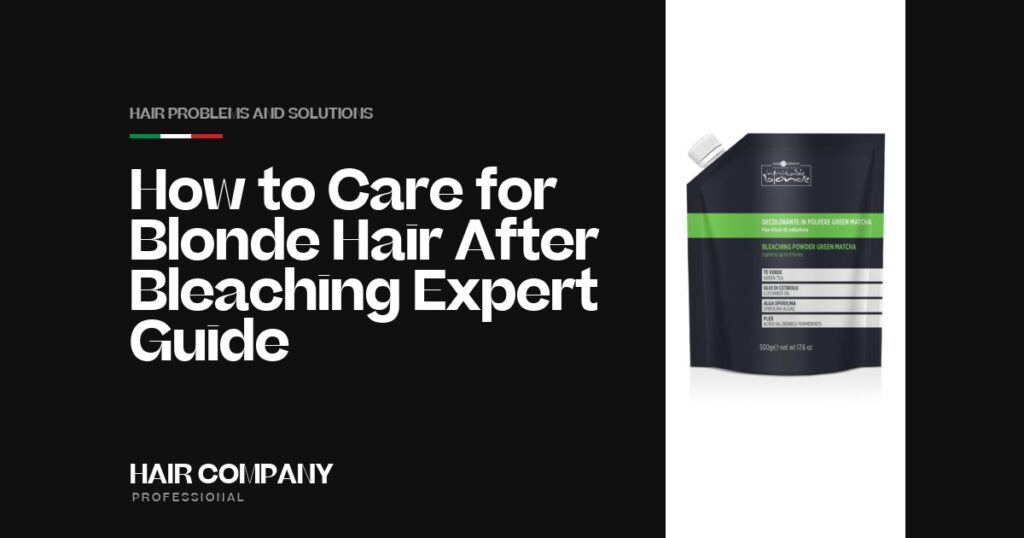
* For High-Precision Freehand & Balayage: Lighteners infused with protective plex systems safeguard the cortex during oxidation. BLEACHING POWDER GREEN MATCHA (£28.49) harnesses a cutting-edge Hyaluronic Acid Plex alongside green tea and spirulina algae to shield hair integrity, transforming into a rich, conditioning mask texture during application.
* For High-Lift Scalp & Sensitive Applications: Conditioning cream bleaches replenish lipids while lifting. The BLEACHING CREAM (£26.99) delivers exceptional lifting power while infusing the hair with nourishing shea butter, restructuring silk extracts, and remineralising white pearl to prevent excessive dryness from the outset.
The Immediate Post-Bleach Protocol: The First 72 Hours
The first few days following a lightening service are critical for stabilising the hair cuticle and locking in artificial toner pigments.
1. Delay the First Wash
Wait at least 48 to 72 hours before shampooing your hair after a salon lightening service. This window allows the hair shaft to fully settle, contracts the cuticle layer, and prevents premature colour fading.
2. Lower the Water Temperature
When you do wash your hair, always use lukewarm or cool water. Hot water forces the delicate cuticle layer open, stripping away essential moisture and leaching toner molecules down the drain. A cool rinse smooths the cuticle flat, enhancing natural shine and light reflection.
3. Handle Fragile Strands with Extreme Care
Wet bleached hair is in its most vulnerable state due to compromised elasticity. Avoid aggressive towel drying, which causes friction, breakage, and frizz. Instead, gently press excess water out using a soft microfibre towel or pure cotton wrap.
Building an Essential Post-Bleach Hair Care Routine
Maintaining bleached hair requires a disciplined balance between structural protein reconstruction, intense hydration, and external protection. A piecemeal approach rarely delivers results; lightened tresses thrive best under a coordinated, salon-grade regime.
“
       ┌────────────────────────────────────────────────────────┐

       │         The Post-Bleach Daily & Weekly System          │

       └────────────────────────────────────────────────────────┘

                                    │

         ┌──────────────────────────┴──────────────────────────┐

         ▼                                                     ▼

┌─────────────────────────────────┐   ┌─────────────────────────────────┐

│     Hydration & Nourishment     │   │      Protection & Defence       │

├─────────────────────────────────┤   ├─────────────────────────────────┤

│ • Targeted lipid replenishment  │   │ • UVA/UVB photo-shielding       │

│ • Deep-conditioning masques     │   │ • Anti-chlorine / salt removal  │

│ • Gentle, low-friction washing  │   │ • Heat defence up to 230°C      │

└─────────────────────────────────┘   └─────────────────────────────────┘
1. Rebuild and Rehydrate with a Professional Regimen
Bleached strands require consistent replenishment of essential amino acids and emollients. Investing in a complete, synergistic system like the Hair Care Professional Routine (£129.99) provides the targeted, multi-step care required to rebuild inner keratin bonds, restore vital elasticity, and impart a silky, reflective finish to stressed hair fibres.
2. Balance Protein and Moisture
Healthy blonde hair relies on equilibrium between strength and softness:
* Protein Overload Warning: Relying exclusively on heavy keratin treatments can cause hair to become rigid, brittle, and prone to snapping.
* Moisture Imbalance: Moisture without structural support leaves bleached hair mushy and elastic when wet.
* The Solution: Alternate between a rich, emollient-dense hydrating mask and a peptide-infused bond-building treatment once or twice weekly.
3. Detangle with Precision
Always apply a nourishing leave-in conditioning spray or detangling fluid before brushing. Use a wide-tooth comb or a flexible detangling brush, beginning strictly at the ends and gradually working your way up to the roots to prevent mechanical breakage.
Protecting Blonde Hair from External Aggressors
Bleached hair acts like a sponge, absorbing impurities from the environment that cause discolouration, oxidative stress, and structural breakdown.
Defending Against Sun, Salt, and Chlorine
UV radiation oxidises blonde pigments, turning clean, cool tones into brassy yellow or dull orange hues. Additionally, chlorine in swimming pools binds to porous, bleached strands, potentially turning blonde hair greenish and severely drying out the cortex.
To counteract these elements, incorporate specialised multi-action care:
* Before swimming, wet your hair thoroughly with clean tap water and apply a protective oil or barrier balm to prevent chlorinated water absorption.
* Cleanse immediately after sun or pool exposure using SEA BREEZE HYDRATING SHOWER GEL AND SHAMPOO 250ML (£13.6). This revitalising 2-in-1 formula uses Beta Carotene, Polynesian Beauty Oil, and Jasmine Extract to eliminate chlorine and sea salt deposits, repair sun-affected fibres, and infuse deep moisture without stripping delicate tones.
Combating Hard Water Mineral Buildup
Hard water contains heavy concentrations of calcium, magnesium, copper, and iron. When these minerals settle onto porous bleached hair, they cause brassiness, stiffness, and persistent dullness. Installing a filtered shower head and incorporating a gentle clarifying treatment once a fortnight will keep your blonde bright and clean.
Thermal Styling Best Practices for Bleached Hair
Because chemical lightening permanently alters the hair’s internal protein matrix, heat styling must be approached with caution.
1. Never Skip Heat Protection: Always apply a professional thermal protector across every section before blow-drying or heat styling. This creates a protective barrier that seals the cuticle and prevents moisture vaporisation.
2. Lower Your Appliance Temperatures: Never use styling irons at maximum heat. Keep flat irons and curling wands below 180°C (350°F). Excessive temperatures will scorch lightened hair, causing irreversible keratin breakdown and yellowing.
3. Embrace Heat-Free Styling: Give your hair regular breaks by opting for silk heatless curlers, loose braids, or air-dried styles supported by salon-grade leave-in creams.
Professional In-Salon Maintenance Schedule
Home care is vital, but consistent professional upkeep keeps bleached hair healthy and tonally balanced over the long term.
| Treatment / Service | Recommended Frequency | Primary Benefit |
| :— | :— | :— |
| Toner & Gloss Refresh | Every 4–6 Weeks | Neutralises brassy tones, seals the cuticle, and restores mirror-like shine. |
| Split-End Dusting / Trim | Every 6–8 Weeks | Eliminates split ends before they travel up the hair shaft and cause breakage. |
| In-Salon Deep Reconstruction | Every 4–6 Weeks | Replenishes lost lipids and reinforces polypeptide bonds at a deeper cortical level. |
| Root Lightening Retouch | Every 5–7 Weeks | Prevents banding and ensures consistent, even lifting without overlapping onto fragile pre-lightened lengths. |
Summary: The Pillars of Radiant Bleached Hair
Caring for blonde hair after bleaching is an ongoing commitment to structural repair, moisture restoration, and proactive protection. By integrating advanced lighteners like BLEACHING POWDER GREEN MATCHA (£28.49) and BLEACHING CREAM (£26.99) at the salon level, maintaining the hair with the comprehensive Hair Care Professional Routine (£129.99), and defending strands against environmental stressors with SEA BREEZE HYDRATING SHOWER GEL AND SHAMPOO 250ML (£13.6), you ensure your blonde remains resilient, vibrant, and radiantly healthy.
Frequently Asked Questions
Quick Navigation:
- How often should I wash my hair after bleaching?
- Why has my bleached blonde hair turned brassy, and how do I fix it?
- Can I repair severely damaged, snapped hair after bleaching?
- Is protein or moisture more important for bleached hair?
- How hot can my styling tools be on bleached blonde hair?
- What should I do immediately if my hair feels gummy or stretchy when wet?