

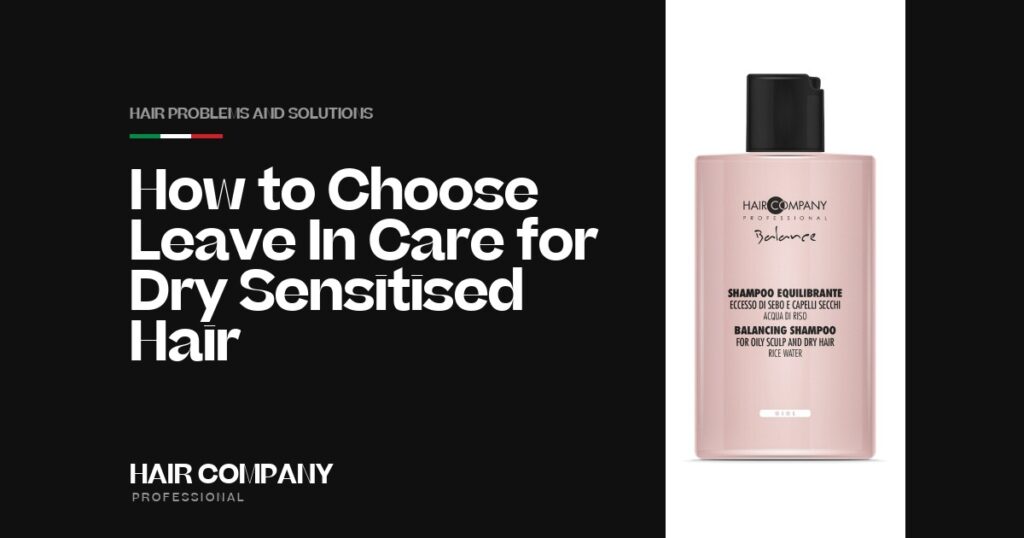
Dry, sensitised hair is one of the most frequent challenges encountered in the salon chair. Whether caused by chemical lightening, aggressive heat styling, environmental exposure, or natural moisture deficiencies, compromised hair fibres demand targeted intervention. While rinse-out conditioners and deep treatments provide essential structural nourishment, a leave-in product acts as an indispensable daily shield and continuous moisture reservoir.
Selecting the correct leave in product for dry or sensitised hair requires an understanding of hair structure, porosity, and cosmetic chemistry. This guide explores the essential criteria for selecting the ideal leave-in formula to restore resilience, elasticity, and radiant shine to vulnerable strands.
Understanding the Difference: Dry vs. Sensitised Hair
Before selecting a product, it is vital to distinguish between dry hair and sensitised hair, as their restorative requirements differ significantly.
What is Dry Hair?
Dry hair is fundamentally a moisture and lipid deficiency. The scalp may produce insufficient natural sebum, or environmental factors such as cold winds and central heating may deplete the hair’s surface moisture. The cuticle layer remains largely intact, but it lacks the lipid coating needed to maintain suppleness.
Common symptoms of dry hair include:
* A rough, lacklustre texture
* Dullness and reduced light reflection
* Static electricity and flyaways
* Mild tangling at the ends
What is Sensitised Hair?
Sensitised hair refers to a chemically or mechanically altered state where the internal cortex and external cuticle have suffered structural breakdown. Bleaching, permanent colouring, excessive thermal styling, and chemical straightening strip away natural proteins and the protective 18-MEA lipid layer.
Common symptoms of sensitised hair include:
* Extreme porosity (absorbing water instantly yet drying brittle)
* Loss of elasticity, snapping easily when stretched
* Split ends and frayed cuticle scales
* Rapid colour fading and uneven toner absorption
Many clients exhibit both conditions simultaneously: hair that is naturally dry and chemically sensitised.
Why Leave-In Treatments Are Essential for Compromised Hair
Rinse-out masks and conditioners are formulated to penetrate quickly and deposit conditioning agents that withstand rinsing. However, sensitised hair loses moisture rapidly through open cuticles. A leave-in treatment bridges this gap by offering prolonged benefits:
- Continuous Hydration: Humectants remain in the cortex, drawing environmental moisture to maintain fibre suppleness throughout the day.
- Cuticle Realignment: Conditioning polymers smooth the overlapping cuticle scales, locking in active ingredients and sealing split ends.
- Thermal and Environmental Defence: Leave-in formulas deposit a micro-fine protective film that buffers the fibre against heat tools, UV degradation, and friction.
- Fibre Manageability: By neutralising static and detangling wet strands, leave-ins significantly reduce mechanical breakage during brushing and styling.
Key Ingredients to Look For
When evaluating leave-in formulations and supporting care systems, salon professionals and discerning clients should look for targeted active ingredients:
1. Biomimetic Keratin and Proteins
Sensitised hair has depleted amino acid chains. Hydrolysed keratin and biomimetic proteins match the natural structure of human hair, selectively adhering to damaged sites along the cortex and cuticle to reinforce tensile strength.
2. Panthenol (Pro-Vitamin B5)
An exceptional humectant with a low molecular weight, panthenol penetrates the hair shaft to deliver deep moisture retention. It smooths the surface, imparts brilliant shine, and enhances elasticity without weighing the hair down.
3. Plant Stem Cells and Botanical Complexes
Innovative formulas incorporate stem cell technology, such as Alpha stem complex, which works synergistically with botanical oils like Jojoba (Simmondsia chinensis) to seal frayed ends and protect against oxidative stress.
4. Fermented Botanical Extracts
Fermented ingredients, such as fermented rice water, offer concentrated nutrients and antioxidants. They support scalp equilibrium while strengthening mid-lengths and ends against mechanical stress.
How to Choose the Right Leave-In Formulation
Choosing the best product depends on three key variables: hair diameter, porosity level, and styling goals.
Leave-In Sprays and Milks: Best for Fine to Medium Sensitised Hair
Fine hair that has been bleached or heat-sensitised can easily become limp if overloaded with heavy butters. A lightweight leave-in spray or emulsion enriched with panthenol and liquid proteins delivers strengthening agents without collapsing natural volume.
Leave-In Creams and Lotions: Best for Thick, Coarse, or Extremely Dry Hair
Thicker hair fibres require higher concentrations of emollient lipids, cetearyl alcohol, and natural oils. Rich conditioning creams coat the cuticle, tame unruly textures, and provide the weight needed to control frizz and restore softness.
Sealing Serums and Fluids: Best for Split Ends and High Porosity
Serums formulated with cosmetic polymers and lightweight esters are ideal as a final step on compromised ends. They create a hydrophobic barrier that seals the cuticle and prevents moisture loss throughout the day.
Building the Complete Restorative Regimen
A leave-in product performs at its highest level when integrated into a structured, professional hair care routine. For optimal results on dry and sensitised hair, follow this step-by-step approach:
Step 1: Gentle Cleansing
Sensitised mid-lengths require a gentle touch at the scalp. Using a harsh, high-pH shampoo will further disrupt the cuticle. Prepare the hair with BALANCE DRY HAIR SHAMPOO (£14.45), which utilizes fermented rice water and panthenol to cleanse effectively while respecting the moisture balance of delicate strands.
Step 2: Deep Reconstruction
Before applying your leave-in treatment, treat the internal structure with a concentrated treatment. The HAIR REPAIR MASK 250ML (£14.49) delivers cosmetic emulsion technology powered by biomimetic hydrolysed keratin and Alpha stem complex to repair structural damage and seal split ends.
Step 3: Complete Professional Maintenance
For comprehensive restoration, salons and clients can implement the complete Hair Care Professional Routine (£129.99), ensuring every phase of the wash, condition, and treatment process works in synergy to rebuild compromised fibres.
Step 4: Leave-In Application and Protective Styling
On clean, towel-dried hair, distribute your chosen leave-in treatment evenly from mid-lengths to ends using a wide-tooth comb. When styling requires strong architectural hold without compromising moisture, finish with HIGH DEFINITION HAIRSPRAY STRONG 500ML (£27.62). Its panthenol-infused formula provides long-lasting, residue-free hold while conditioning the hair fibre.
Professional Application Techniques
To maximise the benefits of any leave-in treatment, application technique is paramount:
- Remove Excess Moisture First: Never apply leave-in products to dripping wet hair. Gently squeeze out excess water with a microfibre towel to prevent the active ingredients from being diluted.
- Emulsify in Hands: Rub the product thoroughly between your palms before touching the hair to ensure an even distribution.
- Focus on the Danger Zone: Begin application at the ends—where hair is oldest and most sensitised—working upward toward the mid-lengths. Avoid applying directly to the root area to maintain natural lift and volume.
- Comb Through: Always use a wide-tooth comb or detangling brush to distribute the product uniformly across every strand before applying heat or air-drying.
Common Mistakes to Avoid
1. Using Leave-Ins as a Substitute for Rinse-Out Masks: Leave-in products are designed for surface protection and light hydration; they do not replace the deep cortical reconstruction provided by a professional mask.
2. Applying Too Much Product at Once: Start with a small, coin-sized amount. Layering more product as needed prevents build-up and heavy residue.
3. Ignoring Heat Protection: If blow-drying or heat-styling dry or sensitised hair, ensure your leave-in system provides thermal defence to prevent further keratin breakdown.
Investing in targeted professional care transforms dry, brittle, and sensitised hair into a resilient, luminous, and healthy-looking mane.
Frequently Asked Questions
Quick Navigation:
- Can a leave-in conditioner replace a traditional hair mask?
- How often should I apply a leave-in product to dry hair?
- Will leave-in products weigh down fine, sensitised hair?
- What is the main cause of hair becoming sensitised?
- Should leave-in treatments be applied to wet or dry hair?
- What ingredients should be prioritised for extremely brittle ends?